Multi-Generational Living: Designing Homes for Extended Families in the Gulf
Updated:
The tradition of extended families living under one roof remains deeply rooted in Gulf culture, creating unique interior design challenges that balance privacy with togetherness. As modern lifestyles intersect with cultural values, homeowners increasingly seek sophisticated solutions that honor family bonds while providing individual autonomy. Leading specialists like Antonovich Design, recognized as a best fit out company for villa projects in Dubai, have pioneered approaches that seamlessly integrate multi-generational needs into luxurious residential spaces. The key lies in thoughtful spatial planning that respects both tradition and contemporary living standards.
Understanding Multi-Generational Living in Gulf Culture
Multi-generational households in the Gulf region differ significantly from Western interpretations. Here, three or even four generations coexisting isn’t merely a practical arrangement—it’s a cherished cultural norm that strengthens family bonds and ensures elderly relatives receive proper care and respect. Grandparents play active roles in raising grandchildren, passing down traditions, and maintaining family cohesion.
However, modern families also require privacy, independence, and spaces that accommodate diverse daily routines. The challenge becomes creating environments where a businessman can take early morning conference calls, teenagers can study without disturbance, grandparents can enjoy peaceful afternoons, and young children can play freely—all within the same home.
Strategic Zoning: Creating Privacy Within Togetherness
Vertical and Horizontal Separation
The most effective multi-generational homes utilize strategic zoning to create distinct living areas. In villa designs, this often means dedicating entire floors or wings to different family units. Ground floors typically accommodate communal spaces and elder-friendly bedrooms, eliminating stair navigation for grandparents. Upper floors house younger families, providing active children with space while maintaining accessibility to shared areas.
Horizontal zoning works equally well, particularly in sprawling single-story villas common across the Gulf. Eastern and western wings can house different generations, connected by central gathering spaces that serve as the home’s heart. This layout provides physical separation while maintaining visual and emotional connection.
Buffer Zones and Transition Spaces
Thoughtful designers incorporate buffer zones between private and shared areas. These transitional spaces—hallways, ante-rooms, or small sitting areas—provide acoustic and visual barriers while preventing the home from feeling segmented. A reading nook between the grandparents’ suite and the main living area, for instance, offers a quiet retreat while softening the boundary between spaces.
Soundproofing Solutions for Peaceful Coexistence
Architectural Soundproofing
Effective acoustic management begins at the architectural level. Double-stud wall construction, staggered studs, and resilient channels significantly reduce sound transmission between rooms. For existing homes, adding mass-loaded vinyl barriers within walls during renovation provides substantial improvement.
Floor-to-ceiling soundproofing deserves particular attention in multi-story homes. Impact noise from footsteps above can disturb elderly residents below. Solutions include acoustic underlayment beneath flooring, suspended ceilings with sound-absorbing materials, and dense carpet padding in high-traffic areas.
Strategic Material Selection
Interior finishes dramatically affect acoustic performance. Heavy drapes, upholstered wall panels, and thick carpets absorb sound rather than reflecting it. In Gulf homes where marble and tile flooring predominates for cooling purposes, strategically placed area rugs reduce sound transmission while maintaining the aesthetic appeal of natural stone.
Solid core doors, properly sealed with acoustic gaskets, prevent sound leakage between rooms. For music rooms, home theaters, or teenagers’ bedrooms, investing in specialized acoustic doors ensures activities in one area don’t disturb others.
Designing Independent Entry Points
Separate Entrances for Autonomy
Modern multi-generational villas increasingly incorporate separate entrances for different family units. This feature provides independence for adult children, allows grandparents to receive visitors without disrupting the household, and gives each generation control over their daily schedules.
Secondary entrances need not compromise security or aesthetic cohesion. Tasteful designs integrate additional doorways into the villa’s architecture, often positioning them in side courtyards or rear gardens. Smart home technology enables monitoring all entry points from a central system while giving each family unit its own access codes.
Service and Guest Access
Dedicated service entrances prevent staff movement from intersecting with family privacy zones. Similarly, guest entrances leading directly to formal majlis spaces allow social entertaining without requiring visitors to traverse private family areas—a consideration particularly important in Gulf culture where hospitality and privacy both hold paramount importance.
Shared Gathering Spaces That Unite Generations
The Central Family Majlis
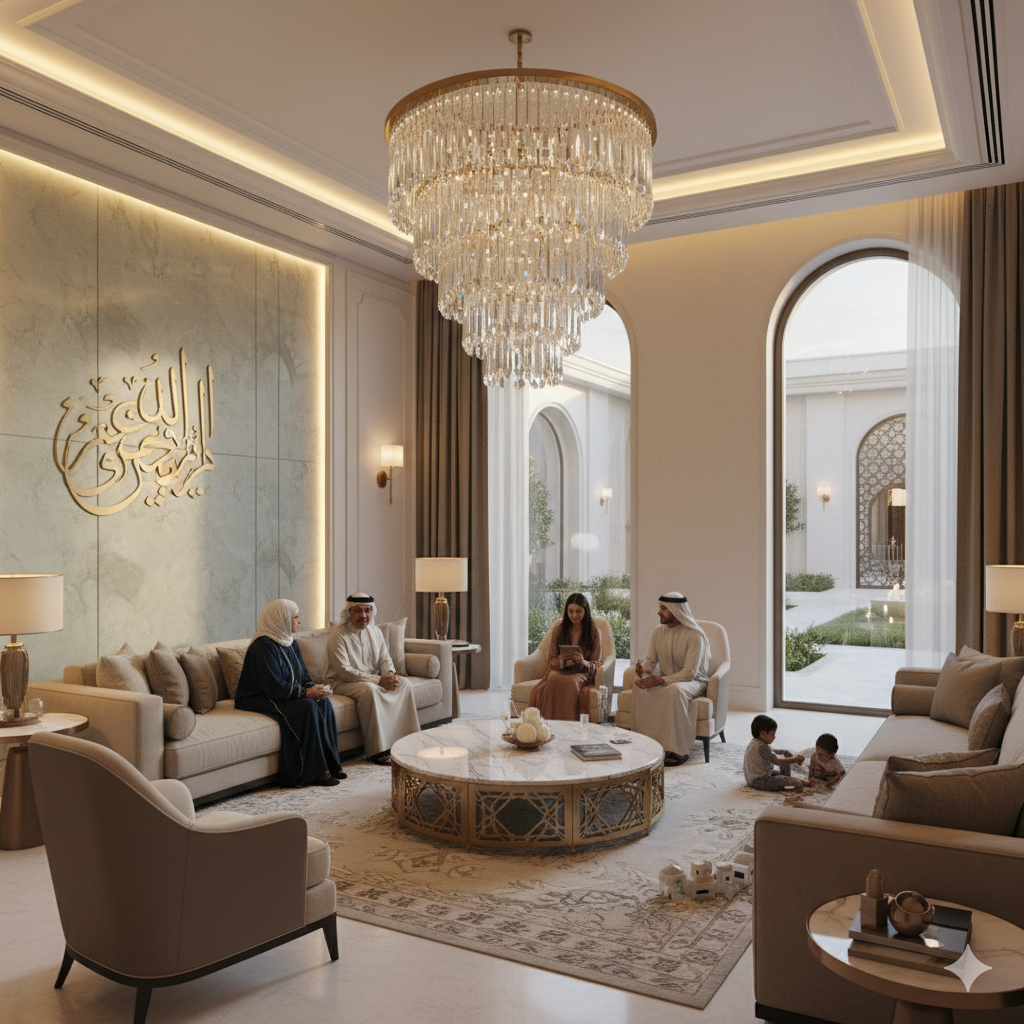
At the heart of every successful multi-generational home lies a welcoming communal space. The family majlis serves as the living heart where generations naturally converge for meals, conversations, and celebrations. This space should be generous, comfortable, and centrally located, yet acoustically separated enough that its use doesn’t disturb those in private areas.
Flexible furniture arrangements accommodate different gathering sizes—from intimate coffee sessions between grandmothers and granddaughters to large family celebrations. Durable, easy-to-clean fabrics prove essential when spaces serve both formal entertaining and children’s play.
Outdoor Living Areas
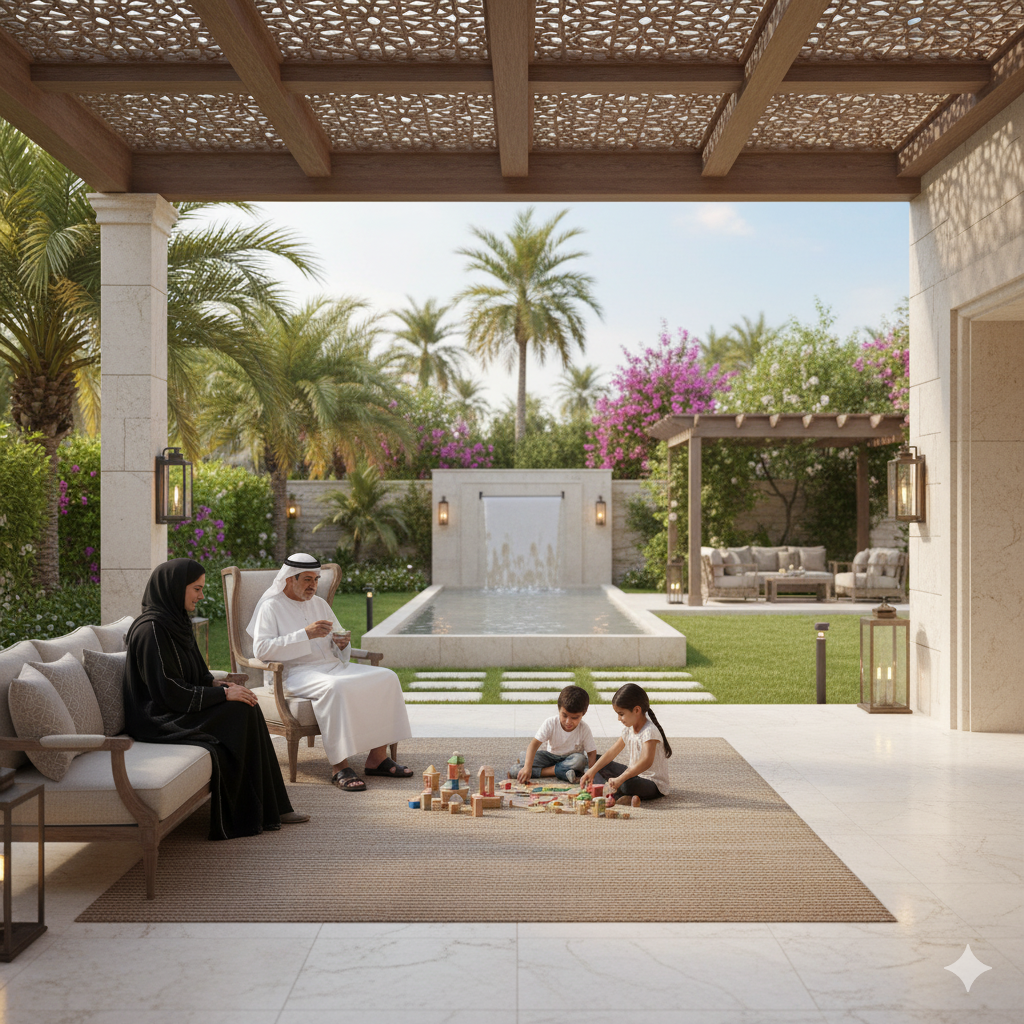
Gulf weather permits extensive outdoor living during cooler months. Covered terraces, courtyards, and gardens become vital shared spaces where generations interact naturally. Shaded seating areas attract grandparents during mornings, while secure play zones give children freedom under watchful supervision.
Water features provide soothing soundscapes that mask conversational noise between zones while adding to the sensory experience. Fire pits or outdoor heating extend usability into winter evenings, creating gathering spots for storytelling traditions passed between generations.
Multi-Purpose Activity Rooms
Dedicated spaces for shared activities strengthen family bonds. Home theaters with tiered seating accommodate movie nights that span generations. Spacious dining rooms that seat extended families for daily iftar during Ramadan reinforce cultural traditions. Game rooms with diverse entertainment options—from traditional board games to modern gaming consoles—create natural interaction opportunities between grandparents and grandchildren.
Cultural Considerations for Elder Care and Respect
Accessible Design for Aging in Place
Gulf culture emphasizes honoring and caring for elderly parents, making aging-in-place features essential. Ground-floor master suites eliminate stair navigation. Barrier-free showers with seating, grab bars discreetly integrated into elegant bathroom designs, and wider doorways accommodate mobility aids without compromising aesthetics.
Smart home systems enable elderly residents to control lighting, temperature, and entertainment without physical exertion. Voice-activated systems prove particularly valuable, allowing grandparents to maintain independence while family members monitor their wellbeing through connected devices.
Prayer Spaces and Religious Observance
Dedicated prayer rooms hold special significance in multi-generational Gulf homes. Positioning these spaces where elderly family members can access them easily, with proper orientation toward Mecca and appropriate acoustic privacy, demonstrates respect for religious practices central to daily life.
Consider multiple prayer spaces rather than expecting all generations to share one area. This allows for different prayer schedules without disruption and provides personal spiritual retreat spaces for various family members.
Kitchen Dynamics and Culinary Traditions
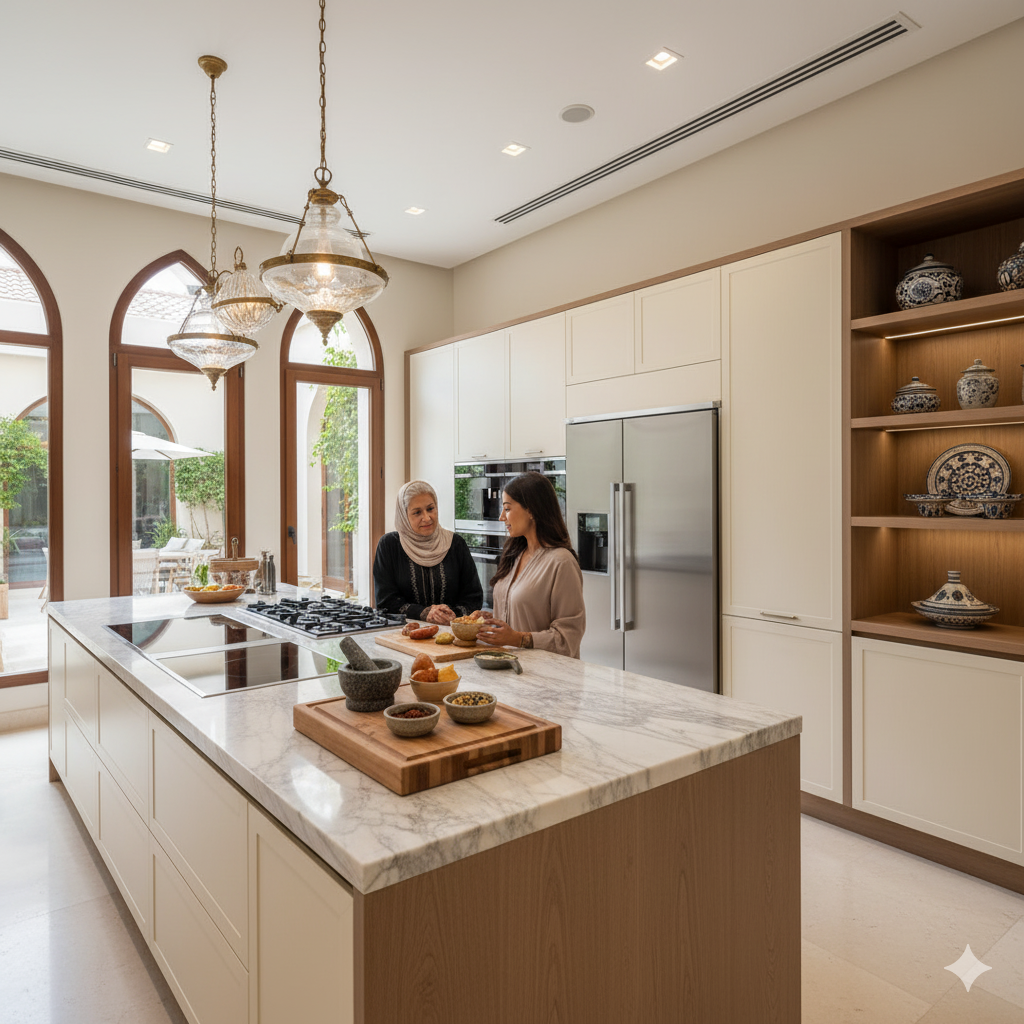
Kitchens in multi-generational Gulf homes often become sites where grandmothers pass down culinary traditions to younger generations. Designing these spaces requires balancing modern efficiency with traditional cooking methods. Dual cooking zones—one equipped for conventional techniques and another featuring contemporary appliances—allow simultaneous use without conflict.
Generous counter space accommodates multiple cooks working together, an essential feature when preparing large family meals. Storage for both everyday dishes and special occasion serving pieces reflects the dual role these homes play in daily life and cultural celebrations.
Balancing Modern Aesthetics With Traditional Values
Design Language That Spans Generations
Successful multi-generational interiors blend contemporary sophistication with traditional elements that resonate across age groups. Younger family members often prefer minimalist, modern aesthetics, while older generations may favor ornate traditional Arabic designs. The solution lies in creating a cohesive foundation with neutral contemporary architecture, then layering in traditional elements through textiles, artwork, and decorative objects.
Mashrabiya screens, for instance, can be reimagined in modern materials and simplified patterns, providing cultural connection while suiting contemporary tastes. Arabic calligraphy in modern interpretations adorns walls in ways that honor heritage while feeling current.
Personal Expression Within Shared Aesthetic
While communal areas maintain cohesive design, private suites should reflect individual preferences. Grandparents’ rooms might feature richer colors, traditional furniture, and cultural artifacts, while young families’ spaces embrace lighter palettes and contemporary lines. This variety within unity respects each generation’s identity while maintaining the home’s overall harmony.
Technology Integration for Connected Living
Smart Home Systems for Family Coordination
Integrated technology helps multi-generational households function smoothly. Centralized calendars displayed on digital boards in communal areas coordinate schedules. Intercom systems enable communication between distant wings without shouting. Smart appliances in shared kitchens can be monitored and controlled, preventing conflicts over oven use or alerting everyone when coffee is ready.
Safety and Security Systems
Multi-generational homes benefit from layered security approaches. While primary systems protect the entire property, individual zones can have separate controls. This allows adult children to arm their wing when traveling without restricting grandparents’ access to gardens. Medical alert systems integrated into smart home platforms provide elderly residents with immediate assistance while giving younger family members peace of mind.
Entertainment Infrastructure
Robust home networks supporting multiple simultaneous streams prevent bandwidth conflicts. Individual televisions and entertainment systems in private areas mean preferences for Arabic dramas, international news, or children’s programs don’t clash. Centralized media servers allow sharing of family photos and videos across all devices, strengthening bonds through digital memories.
Storage Solutions for Multiple Households
Distributed Storage Strategy
Multi-generational living multiplies storage requirements exponentially. Each family unit needs dedicated storage for clothing, personal items, and hobby equipment. Shared spaces require storage for communal items while accommodating individual preferences—from grandmother’s extensive collection of serving platters to children’s sports equipment.
Built-in storage solutions maximize space efficiency and maintain clean aesthetics. Floor-to-ceiling wardrobes in bedrooms, concealed storage beneath communal seating, and climate-controlled rooms for seasonal items keep clutter from overwhelming living spaces. The guide to bespoke walk-in closets covers another option for tailored bedroom storage.
Seasonal and Cultural Item Storage
Gulf households accumulate significant seasonal and cultural items—Ramadan decorations, Eid celebration supplies, traditional dress collections, and gifts for social occasions. Dedicated storage rooms, preferably climate-controlled to preserve delicate textiles and preserve items from Gulf humidity, become essential infrastructure in well-planned multi-generational homes.
Lighting Design for Diverse Needs and Activities
Layered Lighting Approaches
Different generations have varying lighting needs. Elderly residents require brighter task lighting for reading and detailed work, while younger family members might prefer mood lighting for relaxation. Layered lighting systems with multiple control zones allow each area to be adjusted independently.
Natural light maximization benefits all ages—connecting to outdoor views, supporting circadian rhythms, and reducing energy costs. However, generous windows require smart shading solutions that control glare and heat while maintaining views. Motorized shades programmable to daily schedules eliminate manual operation challenges for elderly residents.
Circulation Path Lighting
Safety considerations dictate that pathways between generations’ spaces remain well-lit during nighttime hours. Motion-activated night lighting along hallways and stairs prevents accidents while avoiding energy waste. These systems should provide sufficient illumination for safe navigation without being so bright they disturb sleeping family members.
Wellness and Recreation Spaces
Home Fitness Areas for All Ages
Modern Gulf villas increasingly incorporate fitness facilities that serve multiple generations. While younger family members might use high-intensity equipment, grandparents benefit from spaces accommodating gentle exercise, yoga, or physiotherapy. Pools with varying depths, including shallow areas for water walking exercises, serve diverse fitness levels.
Climate-controlled indoor exercise spaces prove essential in Gulf environments, providing year-round wellness opportunities. Large windows overlooking gardens make these spaces inviting rather than institutional, encouraging regular use across generations.
Gardens and Outdoor Sanctuaries
Landscaped gardens provide therapeutic value for elderly residents while offering safe play areas for children. Shaded seating alcoves scattered throughout gardens create private outdoor retreats. Raised planting beds allow grandparents to maintain gardening hobbies without difficult ground-level work.
Water-wise plant selections appropriate to Gulf climates ensure gardens remain lush without excessive maintenance, reducing the burden on families while preserving green spaces valuable to mental and physical wellbeing.
Future-Proofing for Changing Family Dynamics
Adaptable Spaces for Life Transitions
Families evolve—children grow, elderly parents’ needs increase, new generations arrive. The most successful multi-generational homes incorporate adaptability into their design. Rooms with flexible configurations can transform from nurseries to home offices to guest suites as needs change.
Infrastructure planning should anticipate future modifications. Reinforced walls in strategic locations enable later addition of grab bars or ceiling-mounted patient lifts without major renovation. Plumbing and electrical rough-ins prepared during initial construction facilitate future bathroom additions or kitchenette installations.
Separate Suite Potential
Many Gulf villas incorporate design features allowing portions of the home to function as entirely independent units if family dynamics shift. Guest houses that can be connected or separated from main living areas, kitchenettes in grandparents’ wings that can be concealed or activated, and separate utility meters for different zones provide flexibility for changing circumstances.
Conclusion: Harmony Through Intentional Design
Creating truly successful multi-generational homes in the Gulf requires more than adding extra bedrooms—it demands thoughtful integration of privacy, shared spaces, cultural values, and modern living requirements. The result should feel like one cohesive home rather than separate units sharing a property.
When executed properly, these designs honor the Gulf tradition of extended family living while providing each generation the autonomy and comfort modern life demands. They create environments where grandparents maintain dignity and independence, parents manage careers and family responsibilities, and children grow surrounded by intergenerational wisdom and support.
The investment in proper planning, quality soundproofing, flexible zoning, and culturally sensitive design pays dividends in family harmony, property value, and most importantly, the preservation of close family bonds that define Gulf culture. As housing needs evolve, the principles of respectful multi-generational design will remain essential to creating homes that truly serve as foundations for family life across generations.